MikeNDad | UAE

Home /

Mike N Dad is offering 3 types of pre-engineered steel structures.

  1. Hot rolled pre-engineered steel structure.
  2. Cold Formed Sections in Pre-Engineered Steel Structures.
  3. LGS construction method.
workshop
Hot Rolled Pre-Engineered Steel Structure

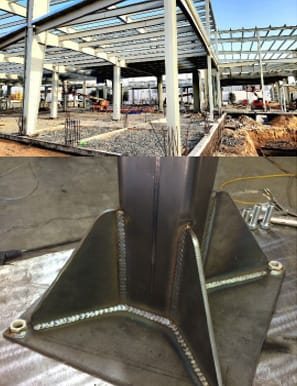
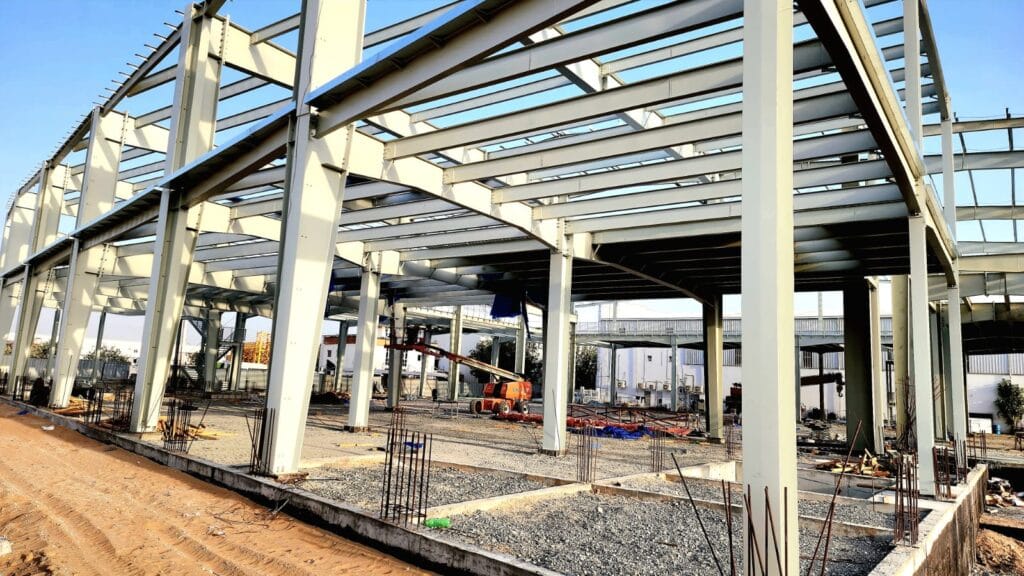
Hot rolled pre-engineered steel structures involve the use of steel sections that are fabricated through a high-temperature rolling process. These sections, which include I-beams, H-columns, and other profiles, are created by heating steel billets or ingots to high temperatures and then passing them through rollers to achieve the desired shapes. The plastic deformation that occurs during the rolling process imparts structural strength and load-carrying capacity to these sections. Hot rolled sections are commonly used for primary load-bearing components in large industrial and commercial buildings due to their robustness and ability to handle heavy loads.
workshop
Cold Formed Sections in Pre-Engineered Steel Structures

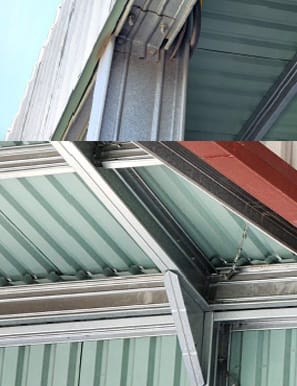
Cold formed sections in pre-engineered steel structures are fabricated by shaping thin steel sheets or strips at room temperature using bending, folding, and roll-forming techniques. These sections typically have a uniform cross-section and are created by forming the steel without the use of heat. Cold formed sections, such as purlins, girts, and wall studs, are used for secondary elements in buildings. While they may have slightly lower load-carrying capacity compared to hot rolled sections, cold formed sections are known for their versatility, cost-effectiveness, and ease of installation. They are often used to create lightweight, non-load-bearing components that contribute to the overall structural integrity of the building.
roof top
Light Gauge Steel (LGS) Construction Method

The Light Gauge Steel (LGS) construction method involves the use of galvanized steel C sections or profiles of varying thicknesses to create the structural framework of a building. LGS sections are cold-formed from galvanized steel coils and are manufactured using computer-aided design (CAD) and computer-aided manufacturing (CAM) technologies. LGS construction offers precision, durability, sustainability, and speed of construction. LGS systems are known for their structural strength, recyclability, and resistance to environmental factors like rust, rot, mould, and insect damage. LGS is versatile and suitable for various building types, and it is especially known for its rapid construction process due to the lightweight and pre-fabricated nature of its components.
Summary:

The three types of pre-engineered steel structures,

  1. Hot rolled
  2. Cold formed sections
  3. LGS construction,

differ in their manufacturing processes, material properties, load-bearing capacity, and applications. Hot rolled sections are heat-formed for primary load-bearing elements, cold formed sections are shaped at room temperature for secondary components, and LGS construction utilizes cold-formed galvanized steel sections for a versatile, sustainable, and efficient construction method.

Pre-Engineered Steel Structure

The ascent of the pre-engineered building system stands as a testament to its remarkable growth on the global construction landscape. Among the choices available today and in the foreseeable future, steel has emerged as the undisputed frontrunner, outshining alternatives like concrete and timber. The evolution of steel building designs has ushered in a new era of flexibility and durability. In our realm, we present comprehensive solutions that encompass every facet of building creation. Our approach is anchored in collaborative ingenuity, tailoring structures to your precise specifications. From the genesis of design to vigilant on-site oversight and seamless execution, our team of seasoned designers, engineers, coordinators, and project managers orchestrates a symphony of efficiency, ensuring your project’s seamless progression.
construction site
Within the realm of pre-engineered building solutions, we unlock the realm of swift readiness and cost-consciousness. These structures, meticulously designed over a foundational framework of primary members (frames), secondary components (roof purlins & wall girts), and protective outer cladding, epitomize both lightweight elegance and unparalleled strength. Diverse functionalities become attainable through the adaptability of Pre-Engineered Steel Buildings. These structures can be augmented with an array of structural additions – from jack beams, mezzanine systems, and crane mechanisms to roof monitors, extensions, and canopies. Notably, the canvas extends to encompass fascia’s, interior partitions, and roof platforms, all finely tuned to match the unique contours of your requirements. In our world, building creation is an art guided by innovation and precision. Elevate your vision with us, where structures transcend convention and redefine possibility.

The Primary Framing System

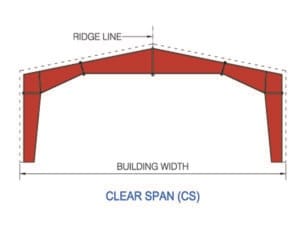
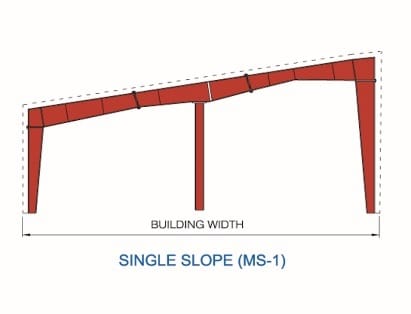
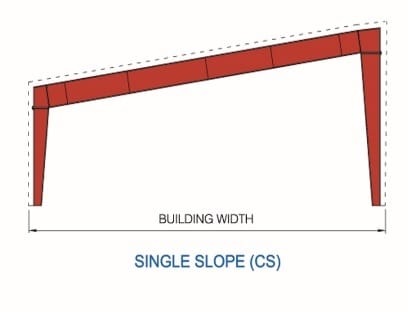
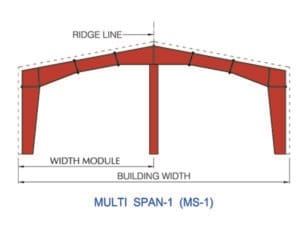
At the core of a pre-engineered building’s architectural essence resides the primary framing system, a meticulously orchestrated assembly of I-shaped members. These elements, often referred to as “I-section beams,” represent a hallmark of precision engineering. Within the realm of pre-engineered buildings (PEB), these I-section beams are expertly fashioned through the fusion of steel plates, seamlessly melding to form a robust I-shaped configuration. It is through these elements that the very essence of structural integrity takes shape. The orchestration of this primary framing structure is a process of both artistry and science. Through meticulous field assembly, where bolted connections come into play, these I-section beams seamlessly unite, culminating in the resplendent framework that defines the entirety of the pre-engineered building. It is within this framework that a remarkable synergy emerges. The geometry of the primary frame intricately mirrors the contours of the internal stress distribution, particularly the bending moment diagram. This symphonic alignment serves as a testament to our commitment to optimal material utilization, an endeavor that not only fosters structural robustness but also leads to the judicious reduction of the overall weight of the entire edifice. In essence, the primary framing system transcends the boundaries of construction, manifesting as a testament to meticulous craftsmanship, engineering precision, and a holistic approach to architectural ingenuity.
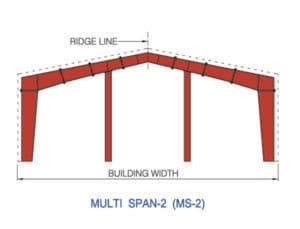
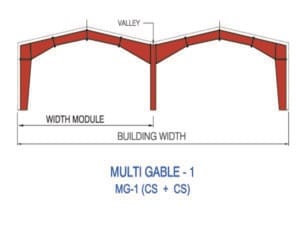
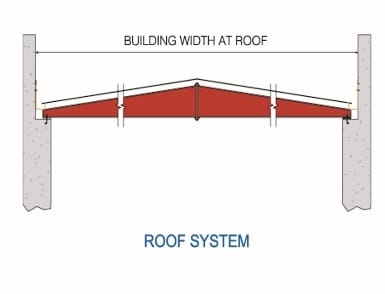
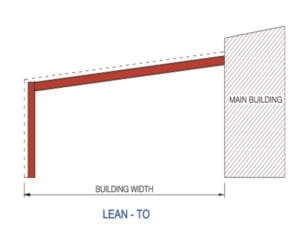
building diagram
building diagram
building diagram
building diagram
Building diagram
EPC contractors in UAE
building diagram
building diagram

The Secondary Framing System

Within our architectural blueprint, the secondary framing system assumes a pivotal role in fortifying structural integrity. This intricate network comprises cold-formed Z and C shaped secondary structural members, serving as a foundational scaffold for the external cladding. At the heart of this system lie a variety of essential components. Roof purlins, wall girts, eave struts, C-sections, flange braces, gable angles, and base angles collectively contribute to the secondary framing’s composition. A hallmark of our design ingenuity lies in the strategic nesting of these secondary structural members along the frames. This meticulous arrangement transforms them into continuous entities, imparting enhanced strength along the building’s entire length. This astute engineering measure effectively doubles the strength capacity precisely at the laps, where internal stresses are conventionally concentrated. Beyond their core load-bearing function, the secondary members embrace an additional layer of significance. They serve as steadfast struts, adeptly countering longitudinal forces such as wind and seismic loads, thereby augmenting the building’s resilience. Moreover, a pivotal facet of their role lies in providing lateral bracing to the compression flanges of the main frame members. This strategic reinforcement significantly amplifies the overall frame capacity, ensuring enduring stability and steadfastness. The secondary framing system stands as a testament to our unwavering commitment to structural excellence, fortifying our architectural marvels with a tapestry of purposeful design and unwavering strength.

Mezzanine Systems

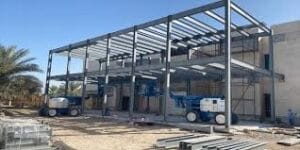
mezEnhancing Architectural Versatility within the realm of architecture, the concept of a mezzanine assumes a pivotal role as an intermediary floor that gracefully bridges the expanse between main levels within a building. This unique architectural feature possesses an inherent elegance, often projecting itself from the walls to create an inviting spatial dimension that maintains an interconnected visual continuity between the ceiling above and the floor directly below. This design hallmark, succinctly put, leads to a harmonious convergence of the mezzanine floor and the floor beneath, sharing a singular ceiling.
In industrial contexts, the application of mezzanine floor systems unveils its pragmatic utility. Positioned as semi-permanent structures, these systems find their purpose within existing buildings, effectively carving a new operational realm between two permanent stories. Notably, the inherent versatility of these structures is underscored by their freestanding nature, offering an inherent advantage of modularity – a feature that seamlessly facilitates disassembly and relocation, as dictated by the operational exigencies.
Here at Mike N Dad, our domain of expertise extends fervently to the realm of Mezzanine Systems. This specialized facet finds its pinnacle of application within industrial landscapes, notably in sectors such as warehousing, distribution, and manufacturing. If the pursuit of optimal material handling efficiency and manufacturing flexibility lies at the core of your operational ethos, Mike N Dad stands poised to transform your space. Our meticulously designed mezzanine systems are imbued with the precision to seamlessly harmonize with your load and material flow requirements, ushering in an era of streamlined productivity.
In the tapestry of architectural innovation, mezzanine systems represent a dynamic interplay of form and function. A fusion of elegance and utility, these systems redefine spatial possibilities, mirroring our commitment to catalyzing efficiency through thoughtful design.

JACK BEAMS

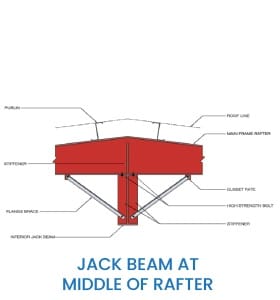
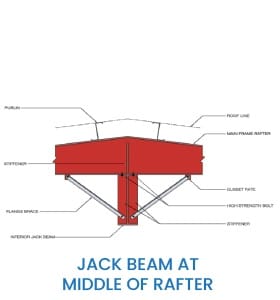
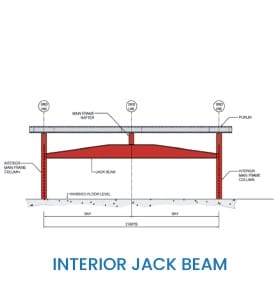
Unleashing Space and Economy Experience the innovation of jack beams, a strategic and secure solution for achieving extended bay lengths in spaces demanding expansive freedom. This ingenious approach ingeniously doubles the conventional bay lengths (ranging from 6 to 10 meters), elevating them to an impressive 12, 15, 16, 18, and 20 meters – a testament to the limitless possibilities offered by jack beams. Imagine a world where unobstructed spaces flourish, where 16-meter bay lengths replace the standard 8 meters, enhancing both form and function. Picture a scenario where interior spaces are empowered by the dynamic utilization of jack beams, transforming visions into reality. Not confined to interiors alone, jack beams gracefully extend their prowess to the exterior sidewalls, etching a seamless blend of artistry and utility. In a recent example, our esteemed customer chose 16-meter bay lengths, shattering the confines of convention and embracing the more efficient path forward. Jack beams emerged as the answer, strategically woven into the building’s core to achieve the unthinkable. This versatility is not only confined to interiors; it extends its embrace to the exterior, redefining possibilities in architectural mastery. Step into a realm where jack beams redefine spatial paradigms, paving the way for grandeur and efficiency. Witness a symphony of innovation where lengthened bay spans breathe life into unexplored dimensions. As pioneers in transformative construction solutions, we invite you to explore the horizons that jack beams unfurl, setting your aspirations free. Top of Form
EPC contractors in UAE

ELEVATING POSSIBILITIES

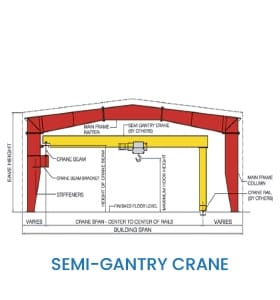
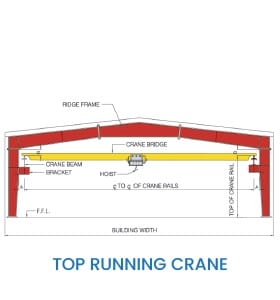
Our Crane System Expertise in the realm of crane systems, RME steel emerges as your trusted partner, providing a specialized range of components that lay the foundation for seamless operations. Our expertise revolves around the supply of critical elements, including column/rafter brackets and the fundamental crane runway beams – essential pillars that uphold the crane system’s functionality.
However, our commitment doesn’t stop at the supply stage. At RME, we believe in a holistic approach. We delve deep into understanding your unique requirements, enabling us to craft a bespoke solution tailored to your needs. Our skilled team takes charge of designing and estimating the crane system, ensuring it aligns perfectly with your project’s specifications.
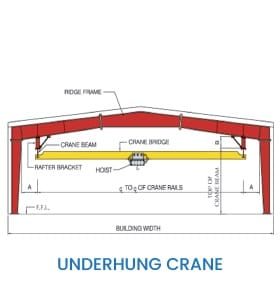
Unveil a world of possibilities as we introduce you to the myriad of crane systems that harmonize effortlessly with pre-engineered steel buildings. Our repertoire includes the esteemed Top Running Cranes, a hallmark of precision and efficiency. For those seeking innovation beneath the surface, our Underhung Cranes redefine possibilities, maximizing space utilization.
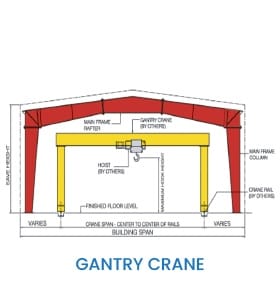
Monorail Cranes take center stage, offering a streamlined solution for targeted movements, while Jib Cranes pivot gracefully, augmenting maneuverability within confined spaces. Gantry Cranes, a symbol of robust strength, stand ready to meet the demands of heavy-duty lifting, while Semi Gantry Cranes bridge the gap between versatility and cost-effectiveness.
Experience the symphony of engineering excellence as RME steel elevates your project through a comprehensive array of crane systems. From inception to implementation, we stand by your side, ensuring every aspect of your crane system journey is characterized by innovation, precision, and unrivalled dedication. Welcome to a new era of elevated possibilities. Welcome to RME steel.

EPC contractors in UAE

Erection Services

We are delighted to introduce Mike N Dad, your trusted partner for the flawless execution of pre-engineered steel building projects. With a wealth of experience and a dedicated team of experts, we guarantee on-time and within-budget erection, tailored to your exact facility requirements. Our PEB specialists possess unparalleled skills and capabilities, allowing us to efficiently erect structures of any size and type. From straightforward installations to intricate designs, our well-trained crews are well-equipped to handle even the most complex PEB structures. Safety remains our utmost priority throughout the erection process. Stringent precautions, including personal safety gear such as hard hats, boots, and safety harnesses, are meticulously checked for all erectors. We conduct thorough assessments of weather conditions and overhead electric lines to ensure a secure work environment. Recognizing the significance of structural integrity, we adhere to a specific installation order for pre-engineered building steel components. Our step-by-step, streamlined process, facilitated by cranes, manlifts, scaffolding, and other necessary equipment, guarantees a seamless and secure erection process. At Mike N Dad, we have earned a reputation for delivering safe, top-quality, and cost-effective erection services, always adhering to project schedules. Your project’s success is our commitment. Should you wish to discuss your upcoming pre-engineered steel building project and explore the ways in which we can contribute to its excellence, please feel free to contact. Thank you for considering Mike N Dad for your steel building needs. We eagerly anticipate the opportunity to work together.
What is the difference between primary and secondary pre-engineered steel structure?
Primary pre-engineered steel structures form the main load-bearing framework of a building, including columns and rafters. They provide structural stability and support for the overall structure.
Secondary pre-engineered steel structures encompass non-load-bearing elements, such as roof purlins, wall girts, and bracing. These components assist in distributing loads, supporting wall and roof panels, and enhancing overall stability.
In summary, primary structures bear the main load, while secondary structures contribute to functionality and overall integrity in a pre-engineered steel building.
 
What is the difference between hot rolled and cold formed sects of pre-engineered steel structure? 
Hot Rolled Sections in Pre-Engineered Steel Structures: Hot rolled sections are created by heating steel billets or ingots to high temperatures and then shaping them through rolling processes. The heated steel is passed through rollers to achieve the desired shapes, such as I-beams, H-columns, and angles. These sections maintain their structural integrity due to the plastic deformation that occurs during the rolling process, resulting in a sturdy and robust profile. Hot-rolled sections are commonly used for primary load-bearing components in pre-engineered steel structures, offering excellent strength and load-carrying capacity.
Cold-Formed Sections in Pre-Engineered Steel Structures: Cold-formed sections, on the other hand, are fabricated by shaping thin steel sheets or strips at room temperature using various bending, folding, and roll-forming techniques. These sections typically have a consistent cross-section, and their strength is derived from the material’s inherent properties rather than plastic deformation. Cold-formed sections are generally lighter than hot rolled sections and are often utilized for secondary components like purlins, girts, and wall studs in pre-engineered steel structures. While they may have slightly lower load-carrying capacity compared to hot rolled sections, cold formed sections offer advantages in terms of versatility, cost-effectiveness, and ease of installation.
In summary, the main differences between hot rolled and cold formed sections in pre-engineered steel structures lie in their manufacturing processes, material properties, and applications. Hot rolled sections are formed through high-temperature rolling, offering robust strength and are suitable for primary load-bearing elements. Cold formed sections are shaped at room temperature and are commonly used for secondary components, providing versatility and cost savings while maintaining adequate structural performance.
 
 
What is LGS construction method? 
LGS is made of galvanized steel C sections of variable thicknesses. It is precise, recyclable (generally 50% of material content is recycled), non-combustible of course and resistant to rot, mould, and mildew, steel is also resistant to insect damage. Overall it is a versatile and quick build method. Need more professional knowledge on this topic.
 
Light Gauge Steel (LGS) construction is a modern and efficient method of building that utilizes galvanized steel C sections or profiles of varying thicknesses to create the structural framework of a building. LGS construction has gained popularity due to its precision, durability, sustainability, and speed of construction. Here is a more in-depth overview of the LGS construction method:

  1. Material and Properties: LGS construction employs galvanized steel C sections, which are cold-formed from galvanized steel coils. The galvanization process involves coating the steel with a layer of zinc to enhance its corrosion resistance and durability. This makes LGS highly resistant to rust, rot, mould, mildew, and insect damage, ensuring the long-term integrity of the building.
  2. Precision and Consistency: LGS components are manufactured using computer-aided design (CAD) and computer-aided manufacturing (CAM) technologies. This results in precise dimensions and consistent quality for each steel section, ensuring a high level of accuracy during construction.
  3. Recyclability and Sustainability: LGS construction is environmentally friendly and sustainable. The steel used in LGS systems is recyclable, with a significant portion of its material content coming from recycled sources. This reduces the environmental impact and supports sustainable construction practices.
  4. Structural Strength: Despite its lightweight nature, LGS is remarkably strong and can support significant loads. The precise manufacturing process and high-quality steel contribute to the structural integrity of LGS buildings. LGS systems are designed to meet stringent building codes and standards.
  5. Versatility: LGS construction is versatile and suitable for various types of buildings, including residential, commercial, industrial, and institutional structures. The flexibility of LGS allows for creative architectural designs and adaptable floor plans.
  6. Speed of Construction: LGS construction is known for its rapid construction process. The pre-fabricated steel sections are lightweight and easy to handle, leading to faster assembly on the construction site. This can significantly reduce construction timelines compared to traditional methods.
  7. Energy Efficiency: LGS construction can incorporate effective insulation materials, resulting in energy-efficient buildings. The precise fit of components also helps minimize air leakage, enhancing overall thermal performance.
  8. Design and Integration: LGS construction integrates well with other building materials, such as concrete, glass, and wood. It can be combined with various architectural styles and finishes to achieve the desired aesthetic appearance.
In conclusion, Light Gauge Steel (LGS) construction is a cutting-edge building method that offers numerous benefits, including precision, durability, sustainability, versatility, and speed of construction. Its combination of technological advancements, material properties, and design flexibility makes LGS an attractive option for modern construction projects.